Kdy a kde: každé pondělí od 17:00 do 18:20 hodin, FHS UK Jinonice, místnost 2066 Přednášející: Mgr. Filip Herza – Univerzita Karlova (FHS / CEFRES) Jazyk: anglicky Kontakt: filip.herza@cefres.cz
Anotace
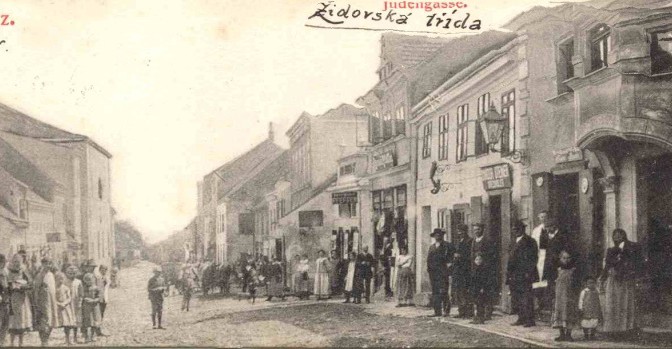
V semináři se zabýváme problematikou města v Dunajské monarchii období fin-de-siécle, a sice specificky z perspektivy urbánní historie. První část semináře je věnována procesu urbanizace a počátkům moderní městské kultury ve Vídni a Budapešti, hlavních městech Rakouska-Uherska, a v regionálních centrech, jako byly Praha či Krakov. Ve druhé části semináře se blíže věnujeme konkrétním aspektům velkoměstské kultury a každodennímu životu v moderních městech. Zvláště nás budou zajímat vlivy nacionalismu, mezinárodní kosmopolitní kultury a nejrůznějších sociálních diferencí v tehdejší společnosti, které se podílely na produkci velkoměstského prostoru. Kurz je určen především zájemcům o urbánní historii a dějiny střední a východní Evropy.
Program jednotlivých hodin
20. 2. Úvod: Cities and urban culture in the Austro-Hungarian empire
27.2. Industrialization: Vienna and Budapest
6. 3. Architecture and city planing: Die Ringstraße and Vienna
13. 3. City planing, hygiene and nationalism in Prague
20. 3. Urban festivities and nationalism in Prague
27. 3. Urban experiences (in Budapest)
3. 4. Popular press and metropolitan identity (in Cracow)
10. 4. Science in/and the City (of Vienna)
17. 4. Moving between cities – technology and transportation (Bratislava/Pressburg/Poszóny)
Kde & kdy: v knihovně CEFRESu, Na Florenci 3, ve čtvrtek 3. a 24. března, 7. a 21. dubna a 5. května 2016, od 16:30 do 18 hodin.
Moderátor: Filip Vostal (CEFRES & FLÚ AV ČR).
René Magritte, The treachery of images (This is not a pipe), oil on canvas, 1928-9
Zatímco v Epistemologickém semináři I. jsme uvažovali o různých pohledech na interdisciplinaritu v širokém teoretickém rámci, současný seminář se bude soustředit na „pragmaticky“, či dokonce prakticky orientované otázky. Doktorandi spolupracující s CEFRESem budou v tomto semestru zkoumat zvolená témata na pozadí různorodých kritických komentářů vzešlých z podzimní části semináře a interdisciplinárních praktik a/nebo diskurzu. Seminář tak představuje unikátní prostředí, ve kterém mohou doktorandi rozvíjet svůj osobitý přístup k interdisciplinaritě a/nebo/skrz specifická témata a výzkumné trajektorie.
3. března 2016 (Edita Wolf) The Notion of Interdisciplinarity in The Postmodern Condition
While grand narratives constructed by the means of metaphysical philosophy legitimate the modern condition of knowledge, incredulity toward metanarratives characterizes the postmodern condition. In his seminal text, Jean-François Lyotard explores the process of de-legitimation of knowledge claims vis-à-vis the end of grand narratives and the parallel emergence of a new legitimation secured in terms of performance and efficiency in the field of knowledge production. The system of disciplines rooted in speculative discourse is thereby replaced by practice justifiable only by the principles of performance and efficiency. On the basis of Lyotard’s text a revision is needed in relation to contemporary debates on theory of interdisciplinarity, where interdisciplinarity becomes either a political exigency or a notion that should yield a deeper meaning to the present status of knowledge production. Thus interdisciplinarity seems to work as a substitute for the old philosophical notions that is detached from the actual workings of today’s science. A re-reading of The Postmodern Condition, that is of an announcement of the end of the discipline of philosophy by a philosopher, will bring us to a reflection on interdisciplinarity as a particular practice that would not necessarily entail construction of a discourse of legitimation.
Literatura:
Jean-François Lyotard. The Postmodern Condition: A Report on Knowledge. Translated by Geoff Bennington and Brian Massumi. Manchester: Manchester University Press, 1984 [1979]
Read the entire book or alternatively the introduction and pp. 31-70.
24. března 2016 (Mátyás Erdélyi) Inventing the Right Numbers: Social Statistics, Commercial Reason, and the Public Good
The present seminar session investigates how social statistics were created, comprehended, and used for commercial and public purposes in Dualist Hungary. It explores different modes of quantification, the inter- or pre-disciplinary sights of scientific production, and power relations between competing expert and nascent professions. Central to this line of inquiry is the investigation of relations between statisticians and other notables (i.e. every person worth of attention and involved in the debate, be it a politician, businessman, any type of scholar) inclined to claim authority over the creation and political/economic use of social statistics. This session contributes to the overall discussions on the nature of interdisciplinarity by describing primeval workshops on interdisciplinarity and by showing how the search for timeless truths and objectivity can be deviated by political and economic interests amidst disciplinary competition.
Literatura:
Theodore M. Porter. ‘Life Insurance, Medical Testing, and the Management of Mortality.’ In Lorraine Daston (ed). Biographies of Scientific Objects. Chicago: University of Chicago Press, 2000, pp. 226-246.
Alain Desrosières. La Politique des Grands Nombres: Histoire de la Raison Statistique. Paris: La Découverte, 1993, pp. 104-111, 182-217, 226-231, 271-276.
7. dubna 2016 (Jana Vargovčíková) Studying the State through the Scandal: On the Epistemic Value of Transgression
‘In olden days a glimpse of stocking was looked on as something shocking. Now, heaven knows, anything goes.’ (Cole Porter).
Far from being anomalies or mere accidents, transgressions are conditioned and given meaning by norms. Subsequently, norms repeatedly reaffirm their legitimacy and meaning in contrast to transgressions. What is considered as transgression and when transgression gains the potential of being turned into a scandal varies in time and space, as the quote suggests. That is why, given the imbrication of norms and transgressions, social scientists and philosophers have turned to cases of transgression in order to understand order, social norms and institutions, as well as to comprehend the nature of the distinction between the two (e.g. Foucault, Becker, Hughes, Goffman). Leaving normative preconceptions aside, then, a sociologist or political scientist can learn from an anthropologist and treat transgressions in the political realm as indicators of the (symbolic, but not exclusively so) structure of the state. Political scandals as narratives of events labelled as transgressive represent precisely such means of enquiry into how a political body organizes the limits of its norms (De Blic & Lemieux) and into how citizens relate to the political order (Gupta).
Literatura:
Damien de Blic & Cyril Lemieux. ‘Le scandale comme épreuve.’ Politix 71 (3): 9–38, 2005.
Akhil Gupta. ‘Blurred Boundaries: The Discourse of Corruption, the Culture of Politics, and the Imagined State.’ American Ethnologist 22 (2): 375–402, 1995.
Chris Jenkins. ‘Transgression: The Concept.’ Architectural Design 83 (6): 20, 2013.
21. dubna 2016 (Lara Bonneau) The uses of analogy in human and social sciences
It is possible to conceive transdisciplinarity as sharing of objects or methods by several disciplines. Besides objects and methods, it can also be – and this might be its first form – the sharing of a common lexicon. The tendency of certain human sciences – philosophy in particular – to use concepts elaborated by other disciplines in other contexts was sharply criticized by Alan Sokal in 1994, in what remains known as the Sokal Affair. The physicist tried to discredit the way certain philosophers were using concepts that belonged to the natural sciences, showing their ignorance about the real meaning of these concepts in their original field and thereby reducing their work to vain language games. Indeed, the use of analogy and metaphor in the human sciences can be put into question. During this session, I will try to show that, if it is not without danger, the use of analogy and metaphor is inherent to the scientific activity, which can moreover be both legitimate and fruitful. I will start with a concrete example: the way the art historian Aby Warburg uses analogy and metaphors from the natural sciences. I will then rely on a more reflexive text about the legitimacy of this method entitled Théorie de l’acte analogique in Simondon’s L’individuation à la lumière des notions de forme et d’information.
Literatura:
Gilbert Simondon. L’individu et sa genèse physico-biologique. Paris: PUF, 1964, pp. 264-268.
Aby Warburg. Miroirs de faille, A Rome avec Giordano Bruno et Edouard Manet. Paris: Presses du réel/L’écarquillé, 2011, pp. 62, 64.
5. května 2016 (Monika Brenišínová) Architecture and Art as Historical Sources: On the Borders of Humanities and Social Sciences
In various theoretical discussions on architecture, we may notice that there is not a singular way of approaching it. From the classical perspective of the history of art classical art historical perspective, it is possible to identify at least three basic methods of inquiry: archaeological building survey („Bauforschung“, A. von Gerkan, in Czech “SHP”, D. Líbal); style-critical and style-historical analyses (H. Wölfflin, H. Focillon, M. Dvořák); semantic analysis (G. Passavant, E. Hubala). When we consider art in general, things however get even more complicated. If we take into account the fact that even among historians of art a consensus about the definition of art as such does not exist, what will happen when we will look at art from the perspective of another scientific discipline? When we conceive art as an historical source, traditional art historical categories such as the aesthetic point of view, the author’s fantasy, the styles or commonplaces (loci communes) quickly lose their significance. Moreover, historical work with visual sources is largely interpretative and requires a significantly critical approach. Thus we suddenly find ourselves on the borders of humanities and social sciences. And it is exactly such space, outside the frontiers of clearly defined disciplines, where the space and time change their shapes and where other disciplines – such as anthropology – can be brought into play.
Literatura:
Clifford Geertz. ‘Art as Cultural System.’ MLN 91(6): 1473–1499, 1976.
George Kubler. ‘History: Or Anthropology: Of Art?’ Critical Inquiry, 1(4): 757-767, 1975.
Academic work has long been divided according to disciplines, which can be considered as the major reference frame of the university. Despite this long-lasting management of scientific activities, many researchers consider such a frame a contrived constraint, especially since scientific objects themselves proceed from the defining of a specific problematic, to which a proper methodology is to be applied to solve it. The uneasiness surrounding the debate on disciplines is increased by two factors: their growing fragmentation into subdisciplines and the rise of the new paradigms of trans- and interdisciplinarity within all research fields.
The research seminar Between Disciplines and Areas aims at discussing this development through the presentation of the research with which scholars of the IMS and the French Research Center in Humanities and Social Sciences (CEFRES) are engaged. Indeed, they are used to working within two frames: the area (or “territory”), which places the research object in a specific context, and the discipline, which constitutes the theoretical backbone of the inquiry. Traditionally area and discipline are divided along the line drawn between empirical and theoretical approaches. This border prompts two main questions: To what extent does a theoretical frame fit to objects in context? And on the other hand, can empirical outcomes provide a more comprehensive understanding?
By presenting their research in situ, scholars are invited to reflect upon the connection between their discipline(s), object and research field. They should therefore elaborate on the methodological inputs and theoretical framework of their researches.
Jazyk: česky a slovensky v zimním semestru – anglicky v letním semestru
Organizátoři: Kateřina Čapková a Michal Frankl
Cílem semináře je vytvořit platformu pro akademickou diskusi nad nejnovějšími výzkumnými projekty k dějinám Židů s důrazem na poslední tři století. I přes přednostní zájem o dějiny střední Evropy se seminář nevyhýbá tématům z dějin židovského obyvatelstva v jiných oblastech. Za obohacující považujeme též témata, která se přímo netýkají židovského obyvatelstva, ale která nám mohou pomoci se na židovské dějiny podívat z jiné perspektivy (např. ostatních „menšin“).
Seminář usiluje přes důraz na historickou perspektivu o multidisciplinární přístup k tématům, tedy i z pohledu sociologie, politologie, dějin náboženství, dějin umění a jiných oborů.
Mezi referujícími se střídají badatelé z českých a zahraničních institucí; odborníci, kteří již delší dobu pracují v oboru, stejně jako studenti na doktorandské úrovni.
Kde & kdy: v knihovně CEFRESu, Na Florenci 3, ve čtvrtek 3. a 24. března, 7. a 21. dubna a 5. května 2016, od 16:30 do 18 hodin Moderátor: Filip Vostal (CEFRES & FLÚ AV ČR) Jazyk semináře: angličtina
Seminář je otevřený studentům a vědeckým pracovníkům z partnerských institucí CEFRESu. Každé sezení začne představením vybraného textu jedním z výzkumníků CEFRESu. Soubor textů bude k dispozici v elektronické formě.
***
Interdisciplinaritu lze definovat jako dialog mezi oblastmi vědění, který zároveň ústí v částečnou reorganizaci a rekonstrukci těchto oblastí. Zároveň je interdisciplinarita obvykle odlišná od pluridisciplinarity, která disciplinární přístupy pouze staví vedle sebe a od transdisciplinarity, která integruje několik disciplín do jednoho přístupu.
Na straně jedné signalizuje proliferace termínu interdisciplinarita reflexivní přístup tradičních akademických disciplín a poukazuje na jednoznačný záměr sbližovat a spojovat metody, způsoby zkoumání, (re)konstrukce teorií a dokonce aplikace vědění. Vědci jsou vzývání aby přemýšleli, chovali se a pracovali synergisticky. Navíc se v posledních dekádách – především s příchodem post-industriální „znalostní ekonomiky“ – stává z interdisciplinarity rozšířená praxe nejen ve vědeckém postupu, ale i princip figurující ve vědní politice. OECD a EU využívají od 60. let 20. století interdisciplinaritu jako instrument k dosažení socio-ekonomických dopadů vědeckého výzkumu, a konfrontují jej s údajným sebe-referenčním „akademismem“ uzavřeného prostředí vědeckých institucí. Diskurz zdůrazňující inovace, aplikace a užší propojení společnosti a vědy dominoval ve veřejných politikách i v 90. letech kdy se výzkum začíná přeskupovat kolem diagnóz a řešení globálních výzev, namísto toho aby následoval standardní disciplinární protokoly. Jak zdůrazňují některé hlavní evropské iniciativy jako např. Horizont 2020, současný výzkum je třeba provádět v kontextu jeho aplikace (Modus 2).
Skeptici, na straně druhé, poukazují na to, že záměrné tříštění disciplinárních hranic narušuje disciplíny samotné jakožto ustavující jednotky akademického provozu – tj. jejich metodologickou, teoretickou, a diskurzivní disciplínu (v smyslu disciplíny-kázně), které tvoří jádro vědeckého poznání a racionality. Zároveň existují argumenty zdůrazňující to, že interdisciplinarita je jakýsi performativní „tahač”, který toho zakrývá více než odhaluje. Není tedy koncept interdisciplinarity redundantní? Nebyly kolaborace napříč a mezi disciplínami vždy přirozenou součástí vědeckého poznání? Nebyly samotné disciplíny vždy v nějakém ohledu interdisciplinární?
Spíše než souborem nedílných praktik vědecké praxe není interdisciplinarita, více než cokoliv jiného, silným nástrojem ve vědních politikách a způsobech organizace vědeckých institucí? Ale současně: pokud chceme oslovit, analyzovat, ale vysvětlit pozdně moderní svět, je možné dnes nebýt interdisciplinární? Není pochyb o tom, že interdisciplinarita proměňuje disciplíny, ale charakter této transformace je stále třeba zkoumat. V tomto semináři budeme diskutovat tyto a další palčivé otázky související s povahou interdisciplinarity. Zaměříme se tak na přísliby a nástrahy spojené s interdisciplinaritou – jakožto praxe, diskurzu a imperativu ve vědecké činnosti.
Francouzský ústav pro výzkum ve společenských vědách