
Tag Archives: Political science

Valeriia Hutsaliuk – Research & CV

Expanding the Understanding of Normative Power and Unpacking Competing Visions of the European Union’s Role in a Changing International Order

Valeriia Hutsaliuk is a political scientist and senior lecturer at the Department of Political Science and International Relations at Lviv Polytechnic National University. Her research interests include the EU’s foreign policy, EU–Ukraine relations, Normative Power Europe, Power in International Relations, Integral Consciousness Theory, and the Fourth Generation of Human Rights. In 2025, she defended her PhD thesis on the prerequisites and specific features of the use of normative power in EU climate policy towards Ukraine. She has subsequently expanded her research through an International Visegrad Fund Research Grant, which enabled her to conduct archival research at the Historical Archives of the European Union, administered by the European University Institute (EUI) in Florence.

At CEFRES, she will work on a project that investigates the relationship between the concepts of normative power and foreign policy leadership and examines whether they should be understood as complementary or contradictory forms of international influence. The EU provides a particularly relevant context for such an inquiry, as it has consistently sought to establish itself both as a normative foreign policy actor and as a leader across multiple policy areas. Building upon this theoretical investigation, her project further explores how competing visions of the EU’s international role are being reconstructed in a period of profound transformation of the international order. Rather than treating Russia’s full-scale invasion of Ukraine as an isolated turning point, the project approaches it as a catalyst that has accelerated broader geopolitical, normative, and institutional shifts already reshaping the foundations of international politics and generating new debates about the EU’s place in an evolving international order.

CV

Education

  • 2021–2025 PhD International relations, public communications and regional studies, Department of Political Science and International Relations, Institute of the Humanities and Social Sciences, Lviv Polytechnic National University

Thesis: Features of the use of normative power in the EU climate policy (on the case of Ukraine)

  • 2018–2020 MSc International Relations, Public Communications and Regional Studies, Department of International Information, Institute of Applied Mathematics and Fundamental Sciences, Lviv Polytechnic National University, cum laude

Thesis: The right to make decisions concerning one’s own body: problems of justification and balancing with competing interests

  • 2014–2018 BSc International Relations, Public Communications and Regional Studies, Department of International Information, Institute of Applied Mathematics and Fundamental Sciences, Lviv Polytechnic National University

Thesis: Threats to human rights with regard to the collection and processing of genetic data

Academic Positions

  • 2026–present Senior Lecturer, Department of Political Science and International Relations, Lviv Polytechnic National University
  • 2026–present UMIFRE Research Fellow, Centre français de recherche en sciences sociales, Prague
  • 2022–2025 Assistant Lecturer, Department of Political Science and International Relations, Lviv Polytechnic National University

Research Visits and Exchanges

  • 2026 Historical Archives of the European Union, European University Institute, Italy (International Visegrad Fund Research Grant)
  • 2026 Lund University, Sweden (House of Europe International Mobility Grant)
  • 2025 University of Silesia, Poland (NAWA Mobility Grant)
  • 2024 Warsaw University of Technology, Poland (NAWA Mobility Grant for a Research Visit)

Publications

Peer reviewed articles

  • Hutsaliuk, V. (2024). The European Union’s climate policy towards Ukraine: normative power Europe in action? Acta de Historia & Politica: Saeculum XXI, 8, 73–87.
  • Hutsaliuk, V. (2023). Features of the European Union’s Foreign Policy Leadership on Preventing Climate Change. Modern Historical and Political Issues, 48, 85–97.
  • Hutsaliuk, V. (2023). Features of the transformation of the EU’s foreign policy behavior paradigm after a full-scale Russian invasion of Ukraine. Acta de Historia & Politica: Saeculum XXI, Special Issue, 24–34.
  • Hutsaliuk, V. (2022). Sanctions as an EU normative foreign policy instrument and their imposition on Russia over Ukraine. Modern Historical and Political Issues, 46, 9–21.
  • Hutsaliuk, V. (2022). Peculiarities of the EU’s normative power use for the establishment of climate-related values in Ukraine. Copernicus Political and Legal Studies, 1(1), 38–47.
  • Sukhorolskyi, P., & Hutsaliuk, V. (2020). Processing of large amounts of personal genetic data: international regulatory issues and human rights challenges. Ukrainian Journal of International Law, 1, 40–49.
  • Sukhorolskyi, P., & Hutsaliuk, V. (2020). Processing of genetic data under GDPR: Unresolved conflict of interests. Masaryk University Journal of Law and Technology, 14(2), 151–176.

Book chapters

  • Hutsaliuk, V. (2023). The normative framework of EU non-normative foreign policy: peculiarities of the EU’s basic values protection in Ukraine in the context of a full-scale Russian invasion. In Y. Turchyn & T. Astramovich-Leik (Eds.), Nowy ład w Europie i Unii Europejskiej: przesłanki – kierunki – priorytety, 49–57.
  • Hutsaliuk, V. (2022). Rethinking the European Green Deal in the context of the Russo-Ukrainian war. In Y. Turchyn & T. Astramovich-Leik (Eds.), The formation and peculiarities of the implementation of the European Union’s Eastern policy, 99–109.

Magdaléna Hadjiisky – Research & CV

Everyday Experiences of Politics: A Study in Two Ordinary Cities in Bulgaria and the Czech Republic

Research Areas 2 and 3: Norms & Transgressions and Objects, Traces, Mapping: Everyday Experience of Spaces

Contact: mhadjiisky@cefres.cz

A Senior Lecturer in Political Science at Sciences Po Strasbourg since September 2005, Magdaléna Hadjiisky teaches comparative politics, the Sociology of International Relations and European Studies. Both her teaching and her research focus on the processes of creating and representing the political and the public sphere, with a dual empirical specialisation centred on Central and Eastern Europe and international organisations.

In recent years, she has been in charge of the Master’s programme in European and International Studies at Sciences Po Strasbourg, as well as the new specialisation created in 2024 (‘European Politics and Governance’). She founded the Observatory of European Political Societies, for which she holds the position of scientific director. https://mastereurope.fr/observatoire/.

Her time at CEFRES will be devoted to a new area of research in her career: the analysis of secular politics in smaller towns. She will conduct her empirical research through observation, documentary analysis and interviews in the two towns selected for this project, in the Czech Republic and Bulgaria. In line with one of CEFRES’s missions – which is to build networks between researchers in France and the Czech Republic, as well as in other Central European countries – she plans to organise academic events on the theme of ‘Secular Experiences of Politics: European Perspectives’, with the aim of facilitating exchange between researchers from France, Central Europe and the Balkans.

Hadjiisky’s research career began at CEFRES and in the Czech Republic. Defended at Sciences Po Paris, her thesis, “From Citizen Mobilisation to Party Democracy: Political Participation and Delegation in the New Czech Democracy (1989–1996)”, analyses the social and political mobilisations and demobilisations that accompanied the political transformation and the demand for democracy in the Czech Republic between 1989 and the mid-1990s.

The research that formed the basis of this work required learning the Czech language (at INALCO and then at Česká škola in Prague) and a research fellowship at CEFRES from 1994 to 1997, in order to carry out fieldwork in Prague, Brno and Ostrava. Combining the sociology of mobilization with the localised sociology of partisan circles, this research analyses the collective actions of 1989 and 1990 in the Czech lands, the emergence and internal evolution of the Civic Forum, its paradoxical partial transformation into the ODS, alongside the gradual ‘partisanisation’ of the Czech political scene in the 1990s. This research has resulted in several publications in French, English and Czech (Hadjiisky, 1999, 2001a, 2007a, 2007c, 2008b, 2008c, 2005a, 2011, 2019a).

At the same time, Hadjiisky has developed a second area of specialisation focusing on the transformations of the post-communist state, through research into the (short-lived) reform of the Czech civil service in the 1990s and 2000s. Although seemingly technical, the question surrounding the status of the central civil service takes on considerable political significance in the post-communist context. She analyses the morphology of the state and its place in society as indicators that reflect the transformation of the frameworks through which the political and the communal are understood in post-socialist societies (Hadjiisky, 2004). In exploring this area of research, Hadjiisky has examined the role played by certain international actors, as well as the context of pre-accession to the European Union, in shaping the way in which civil service reform was carried out in the Czech Republic (Hadjiisky, 2007b, 2008d).

Her subsequent work led her to the sociology of international relations, with a view to situating political change within its relationship to international directives and support (Hadjiisky, 2020a, 2017a, 2017b, 2023). By studying in detail the work of the SIGMA (Support for Improvement in Governance and Management) programme (Hadjiisky, 2017e) and the emergence of the OECD’s PUMA (Public Management) Programme (Hadjiisky, 2016a, 2017c), she sought to capture the gradual transformation of a democratic state project into an expert-led endeavour – a process she had previously explored in her thesis by reconstructing the dynamics of the actors mobilised in Prague, Brno and Ostrava. As with her doctoral thesis, she has focused her empirical research on actors at the middle hierarchy level – those ‘go-betweens’ through whom the narrative becomes real, moves beyond pre-constructed teleological narratives, and reintroduces uncertainty and randomness, even within institutionally constrained environments.

By uncovering certain paradoxes and tensions within international aid, her research – like her teaching at Sciences Po Strasbourg – has encouraged her to return to Central and Eastern Europe to continue exploring the various meanings, practices and uses of ‘democracy’. Thus, having explored democracy and the rule of law in the Czech national and political context, and subsequently from the perspective of their international expert assessment within the OECD and SIGMA-EU, she now wishes to analyse everyday politics within secular social contexts, in order to compare Central and Eastern European social transformations with international imperatives and, ultimately, to offer a reflection on the tensions within contemporary European governance.

CV

EDUCATION

2004 : Doctorat de science politique, Institut d’Etudes Politiques (I.E.P.) de Paris, Centre d’Etudes et de Recherches Internationales (C.E.R.I.).

Intitulé de la thèse : De la mobilisation citoyenne à la démocratie de partis. Participation et délégation politiques dans la nouvelle démocratie tchèque (1989-1996), sous la direction de Jacques Rupnik, directeur de recherche au C.E.R.I., F.N.S.P.

Jury de soutenance : Jean-Michel DE WAELE, Professeur de science politique, Université Libre de Bruxelles ; Pierre GREMION, Directeur de recherche au CNRS, Centre de sociologie des organisations ; Erik NEVEU, Professeur de science politique, IEP de Rennes ; Miroslav NOVÁK, Professeur de science politique à l’Université Charles (Prague)

Mention très honorable avec félicitations du jury à l’unanimité et soutien à la publication, accompagnée du label « thèse européenne ».

1998 : Boursière Robert Schuman de la Fondation Robert Schuman, Paris.

1997 : Boursière Lavoisier du Ministère français des Affaires étrangères, Paris.

1993 – 1997 : Séjour de recherches doctorales en République Tchèque accueillie au Centre français de recherche en sciences sociales (C.E.F.R.E.S.), Prague.

1993 : D.E.A. de science politique, I.E.P. de Paris, cycle d’Etudes est-européennes.

Titre du mémoire : L’imaginaire de l’Occident chez les migrants potentiels bulgares après 1989, dirigé par Anne de Tinguy (C.E.R.I.), Mention très bien avec félicitations du jury.

1993 : Maîtrise de science politique, Université Paris I – Sorbonne.

CAREER PATH

Since 2005 :

Maîtresse de Conférences en Science Politique à l’Université de Strasbourg (Sciences Po Strasbourg)

Membre du laboratoire SAGE (Sociétés, Acteurs, Gouvernement en Europe, UMR 7363 – CNRS-Université de Strasbourg), hébergé à la MISHA (Maison Interuniversitaire des Sciences de l’Homme d’Alsace, USR 3227).

2024-2026 : Co-Responsable du Parcours Politique européenne et Gouvernances (GOV) du Master 2 Etudes européennes et internationales, Sciences Po Strasbourg

Sept. 2023-Sept 2025 : Directrice de la mention Etudes européennes et internationales (EEI), Sciences Po, Université de Strasbourg.

Scientific responsibilities and collaborative activities (since 2016)

2021 – 2025 : Membre nommée de la Section 40 (Politique, Pouvoir, Organisation) du Comité national de la Recherche Scientifique. A ce titre, participation aux 2 sessions annuelles de suivi des carrières de chercheurs et chercheuses, et aux jurys de recrutement au concours de chargé.e de recherche sur la base de l’examen préalable des dossiers.

2021 – : Membre des commissions formation et recherche de l’Institut Thématique Interdisciplinaire MAKeRS sur « La Fabrique de la société européenne »

2022-2025 : Membre du Conseil scientifique du CEFRES (Centre français de recherches en sciences sociales, Prague)

2017-2023 : Co-Responsable, avec Wiebke Keim (CNRS), de l’Axe 3 de SAGE, « Production, circulation et critique des savoirs » et organisatrice du Séminaire de l’Axe 3. Organisation d’un séminaire de recherche mensuel

27-29 June 2018, directrice de l’IOGLOB project, Reviewing Workshop “MicroPolitics in International Organizations: Shaping Governance in an Era of Globalization” Maison Interuniversitaire des Sciences de l’Homme d’Alsace. Université de Strasbourg

Since 2024 : membre du réseau de recherche international LoCi (Lower classes and institutions) coordonné par Vincent Dubois (Sciences Po Strasbourg-SAGE), https://lowerclassinstitutions.com/events/.

Since 2018 : Membre du réseau de recherche international Policy Diffusion. Partenaire de l’organisation et des travaux de International Conference on Policy Diffusion and Development Cooperation, Sao Paulo, 16-19 mai 2018. https://policydiffusion.com/ et Sao Paulo 25-27 mai 2020 : https://policydiffusion.com/icpddc-2020/ Coopération avec les Universités de Liverpool, Carleton (Canada), South Australia, Alberto Urtado (Chili), PUC (Pérou)…

2018-2019 : Lauréate et responsable du Programme MISHA « Construction et circulation des savoirs “experts” sur l’action publique dans l’espace européen : le rôle des organisations internationales ». Budget de 6000 Euros par an.

Dans ce cadre, partenaire de la Journée d’Etudes « Le registre scientifique des Organisations internationales », Lyon, 6-7 juillet 2018.

2016 : organisatrice et responsable scientifique, avec Romuald Normand et David Dolowitz, du Colloque international IOGLOB, International Organizations and the Globalization of Public Instruments and Ideas : Micro-Processes and Actors’ Configurations, 1-3 September 2016, MISHA, Strasbourg

A selection of educational initiatives

2024- : Cours Decentralising the Classroom, decentring the social sciences. Democracy and the people, here and there. Cours optionnel de 4è année du diplôme de Sciences Po. Cours monté avec Wiebke Keim (CR CNRS, SAGE) et, à Santiago (Chili) et à Brasilia (Brésil), avec Leandro Rodriguez Medina (Professor, Center for the Study of Science, Technology and Society, Universidad Alberto Hurtado, Chile) et Stefan Klein (Professor, Department and Graduate Programme of Sociology, Universidade de Brasília, Brazil). Dispositif inspiré de la pédagogie de l’apprentissage en expérimentant (learning by doing) visant à l’internationalisation et à la dé-standardisation des contenus.

2024- : « Incubateur d’innovations publiques et politiques », M2 Politique européenne et Gouvernances. Dispositif tutoré autour d’un cas pratique d’actualité, élaboré et mis en oeuvre en étroite collaboration avec des praticiens de l’UE (CJUE, CE), visant à la professionnalisation par l’expérimentation directe encadrée par des praticiens et par des pédagogues, en français et en anglais. Associé à l’Incubateur : séjour d’étude à Luxembourg pour assister à l’audience de l’affaire étudiée à la CJUE, où plaide l’un des praticiens engagés dans l’Incubateur.

POPULARISING RESEARCH

11 Septembre 2025 : organisation, à Sciences Po Strasbourg, du lancement de l’Observatoire des sociétés politiques européennes, par une table ronde ouverte au public, sur « Conservatismes en action : tensions sociales, fractures électorales et recompositions européennes » : deux parties : 1/ Le Parlement européen et la droite radicale : Stratégies de vote européennes et nationales ; 2/ Migrations contestées, sociétés fracturées ? Entre politiques d’accueil, discours médiatiques et réalités sociales. https://mastereurope.fr/11-septembre-2025-lancement-officiel-de-lobservatoire-des-societes-politiques-europeennes/

22 Septembre et 10 décembre 2025 : organisation de deux conférences inaugurales du Master Etudes européennes de Sciences Po, sur le thème « Les sciences sociales face aux sociétés en guerre ». Conférence 1 sur l’Ukraine (22 septembre) ; Conférence 2 sur Gaza et la Cisjordanie (10 décembre). https://www.sciencespo-strasbourg.fr/agenda/evenement/conferences-de-rentree-du-master-etudes-europeennes-et-internationales-de-sciences-po-strasbourg

Novembre 2023 : participation à l’organisation d’une série de conférences sur le thème des universités en exil, à l’occasion des « Temps fort » du Jardin des Sciences « Libertés scientifiques et exil », en partenariat avec la Caravane des libertés scientifiques pour la libération de Fariba Adelkhah (http://www.fasopo.org/caravane).

https://www.misha.fr/agenda/evenement/libertes-scientifiques-et-exil

2 novembre 2022 : Interviewée dans l’émission de France Culture, Sans oser le demander, « Comment renverser un régime sans verser de sang ? », 58 minutes d’interview https://www.radiofrance.fr/franceculture/podcasts/sans-oser-le-demander/revolution-de-velours-comment-renverser-un-regime-sans-verser-de-sang-9338900

15 et 24 mars 2022 : organisation et participation à deux conférences-débats ouvertes au public pour décrypter la situation ouverte par l’attaque armée de la Russie contre l’Ukraine : « Décryptage interdisciplinaire : le conflit armé en Ukraine » et « Des voix de l’Est sur la situation en Ukraine » – cette dernière conférence avec le concours, en visioconférence, des collègues centre-est européens de Pologne, Bulgarie, Roumanie. https://evenements.unistra.fr/agenda-unistra/detail-evenement/19811-decryptage-interdisciplinaire-conflit-arme-en-ukraine

https://www.youtube.com/watch?v=YIAcrmmL4nU

https://evenements.unistra.fr/agenda-unistra/detail-evenement/19875-des-voix-de-lest-sur-la-situation-en-ukraine

17 novembre 2020 : Interview accordée à Radio Praha à l’occasion de la commémoration de la « révolution de velours » : https://francais.radio.cz/a-la-difference-de-la-pologne-ou-de-la-hongrie-1989-reste-globalement-une-8700311

13 février 2020 : organisation d’une conférence-débat dédiée à Fariba Adelkhah (FNSP-CERI) et Roland Marchal (CNRS-CERI), « Chercher en terrain « miné » ? Accès aux sources et liberté de la recherche », MISHA.

2019 : Organisation d’une série de trois conférences sur « Retour sur le ‘clivage Est-Ouest’, 30 ans après », en coopération avec les Jeunes Européens de Strasbourg et le Grand Continent.

PUBLICATIONS

Books or special issues of journals

(with David Dolowitz and Romuald Normand, eds.), Shaping Policy Agendas. The Micro-Politics of International Economic Organizations, Cheltenham: Edward Elgar, 2020a. https://www.e-elgar.com/shop/gbp/shaping-policy-agendas-9781788976985.html

(with Leslie A. Pal, Christopher Walker, eds.), Public Policy Transfer. Micro-Dynamics and Macro-Effects, Cheltenham: Edward Elgar, 2017a, 360p. http://www.e-elgar.com/shop/public-policy-transfer

(avec Claire Visier), Circulation des modèles d’administration, numéro spécial, Revue française d’administration publique, vol. 161, no. 1, 2017b, 234 p. http://www.ena.fr/Recherche-et-documentation/publications/rfap

Politix, « Les hommes d’affaires en politique », coordonné avec Jean-Louis Briquet, 21 (84), 2008a https://www.cairn.info/revue-politix-2008-4.htm

ARTICLES (PEER-REVIEWED JOURNALS)

“Explorando una conversión. La Nueva Gestión Pública en la Organización para la Cooperación y el Desarrollo Económicos (OCDE), entre 1970 y 1980 », Estudios Sociales del Estado – volumen 3, número 5, pp. 55 a 98, 2017c, p.55-98. http://www.estudiossocialesdelestado.org/index.php/ese/article/view/107/78

(avec Visier Claire), « Circulation internationale et fabrique européenne de l’administration publique », Revue française d’administration publique, vol. 161, no. 1, 2017d, pp. 5-18. http://www.ena.fr/Recherche-et-documentation/publications/rfap

« SIGMA : un programme international de renforcement des capacités administratives en terres européennes (1992-2012) », Revue française d’administration publique, vol. 161, no. 1, 2017e, pp. 73-88. https://www.cairn.info/revue-francaise-d-administration-publique-2017-1-page-73.htm

« La better regulation entre coordination européenne et relations triangulaires : OCDE, États membres et Union européenne », Revue française d’administration publique, vol. 158, no. 2, 2016a, pp. 561-575. https://www.cairn.info/revue-francaise-d-administration-publique-2016-2-page-561.htm

“Občanská demokratická strana a prosazení stranickosti v české demokracii devadesátých let” [The Civic Democratic Party and the Ascendance of the Professional Party Organisation in the Czech Democracy in the 1990s], Sociologický časopis / Czech Sociological Review, 2011, 47 (1), p.89-114. . http://sreview.soc.cas.cz/en/issue/116-sociologicky-casopis-czech-sociological-review-1-2011/2101

« De la mobilisation citoyenne à la délégation partisane. L’émergence du Parti civique démocratique (ODS) en République tchèque », Transitions, numéro spécial Les élites intermédiaires dans les partis politiques d’Europe centrale et orientale, XLVIII (1), 2008b, p.57-84. http://dev.ulb.ac.be/cevipol/dossiers_fichiers/4-hadjiisky.pdf

« The Failure of Participatory Democracy in the Czech Republic », West European Politics, 24 (3), July 2001a, p.43-64. http://www.tandfonline.com/doi/pdf/10.1080/01402380108425452

« La démocratie par le marché. Le cas tchèque (1989-1996) », in Changer de régime, dossier coordonné par A. Collovald et B. Gaïti, Politix, (47) automne 1999, p.63-88. http://www.persee.fr/web/revues/home/prescript/article/polix_0295-2319_1999_num_12_47_1793

« République tchèque : la fin annoncée du ‘miracle tchèque’ de Vaclav Klaus ? », Revue internationale et stratégique, in Europe de l’Est, la nouvelle donne, dossier dirigé par E. Kulesza, (26) été 1997, p.75-87.

« L’image de l’« Occident » chez les migrants bulgares », Migrations société, 5 (27), 1993a, p.55-63.

« La Bulgarie et la recherche sur l’histoire du temps présent », Bulletin de l’Institut d’histoire du temps présent, 54, décembre 1993b, p.27-41.

CONTRIBUTIONS TO COLLECTIVE WORKS, INCLUDING HANDBOOKS

(avec Muriel Surdez) “L’internationalisation des problèmes publics : reconsidérer l’articulation entre organisations internationales et espaces nationaux », in Collovald Annie, Guionnet Christine, Le Bart Christian, Renou Gildas, Pour une science politique nomade. Autour des travaux d’Erik Neveu, Rennes, PUR, à paraître 2026, p. 122-137

« Political Analysis », in Radaelli C., De Francesco F., Edward Elgar Companion to the OECD, Edward Elgar Publishing, Cheltenham, Northampton 2023, p.50-66.

« International Organizations as complex agents in policy transfer processes », in O. Porto de Oliveira, dir., Handbook of Policy Transfer, Diffusion and Circulation, Edward Elgar Publishing, Cheltenham, Northampton, 2021a, p.121-154.

(avec O. Porto de Oliveira et P. Hassenteufel) « Circulação internacional e comparação transnacional de políticas públicas », in O. Porto de Oliveira, P. Hassenteufel, dirs., Sociologia Política da Ação Pública. Teorias, Abordagens e Conceitos, Escola Nacional de Administração Pública, 2021b, p.315-334.

(with David Dolowitz and Romuald Normand), “Introduction”, in Shaping Policy Agendas. The Micro-Politics of International Economic Organizations, Cheltenham: Edward Elgar, 2020b, p.1-14.

(with David Dolowitz and Romuald Normand), “Conclusion”, Shaping Policy Agendas. The Micro-Politics of International Economic Organizations, Cheltenham: Edward Elgar, 2020c, p.184-194.

“When Prophecy Succeeds. The Political Failure of Dissidents in the New Czech Democracy”, in Fillieule Olivier and Neveu Erik, eds., Activists Forever? Long-Term Impacts of Political Activism, Cambridge, Cambridge University Press, 2019a, p.224-250.

“Le rôle des organisations internationales dans la diffusion du New Public Management”, in N. Matyjasik et M. Guenoun, dirs., En finir avec le New Public Management ?, Paris, Institut de la gestion publique et du développement économique, 2019b, p.29-46.  https://books.openedition.org/igpde/5798

(with Leslie A. Pal, Christopher Walker, eds.), “Traversing the terrain of policy transfer: Theory, methods, and overview”, in Public Policy Transfer. Micro-Dynamics and Macro-Effects, Cheltenham: Edward Elgar, 2017f, p.1-26.

(with Leslie A. Pal, Christopher Walker, eds.), “Conclusion”, Public Policy Transfer. Micro-Dynamics and Macro-Effects, Cheltenham: Edward Elgar, 2017g, p.271-278.

“Policy Tranfers in Europe. The European Union and Beyond”, in Normand Romuald, Derouet Jean-Louis, European politics of Education? Perspectives from Sociology, Policy Studies and Politics, Routledge, 2016b, p.31-51

« Circulation des modèles d’action publique », in E. Lambert Abdelgawad, H. Michel, dirs., Dictionnaire des acteurs de l’Europe, Bruxelles, Editions Larcier, 2015, p.63-66
« Circulation of  Policy Models », in E. Lambert Abdelgawad, H. Michel, eds., Dictionary of European Actors, Brussels, Larcier, 2015a, pp.48-50

« Assistance internationale », in E. Lambert Abdelgawad, H. Michel, dirs., Dictionnaire des acteurs de l’Europe, Bruxelles, Editions Larcier, 2015b, p.32-36 ; « International Assistance », in E. Lambert Abdelgawad, H. Michel, eds., Dictionary of European Actors, Brussels, Larcier, 2015b, pp.191-194

« Vznik Obcanske demockraticke strany : pokus o sociologickou analyzu » [L’émergence du Parti civique démocratique : essai d’analyse sociologique], in A. Gjuricova, M. Kopecek (eds.), Kapitoly z dejin Ceske demokracie po roce 1989 [Chapitres de l’histoire de la démocratie tchèque après 1989], Paseka, Praha, Litomysl, 2008c, p.70-90. http://hal.archives-ouvertes.fr/hal-00364063

« Europe et réforme de l’administration : le statut des agents de l’Etat en République tchèque », in J. Beck, F. Thedieck, The European Dimension of Administrative Culture, Nomos, Baden Baden, 2008d, p.309-328. http://hal.archives-ouvertes.fr/hal-00364039

« Les économistes au pouvoir. De l’usage d’une expertise professionnelle dans la construction des nouvelles démocraties centre-européennes », in W. Andreff, La transition vers le marché et la démocratie, Paris, Editions La Découverte, 2007a, p. 146-172. http://www.cairn.info/resume.php?ID_ARTICLE=DEC_ANDRE_2006_01_0146

« Européanisation et réforme de l’Etat. L’influence de l’Union européenne sur la réforme des administrations publiques centrales tchèques (1993-2004) », in R. Pasquier, O. Baisnée (dirs.), L’Europe telle qu’elle se fait. Européanisation et sociétés politiques nationales, Paris, CNRS Editions, 2007b, p.167-193. http://halshs.archives-ouvertes.fr/halshs-00307250/fr/

« La culture ‘civique’ en Pays tchèques. Généalogie d’une référence politique », in C. Neveu (dir.), Cultures et pratiques participatives. Perspectives comparatives. Paris, L’Harmattan, Logiques politiques, 2007c, p.331-351.

« Des leaders ‘sans parti’. Engagement résistant et désengagement dirigeant : les anciens dissidents en République tchèque », in L. Arnaud, C. Guionnet (dirs.), Les frontières du politique, 2005, Presses Universitaires de Rennes, 2005a, p.293-323. http://halshs.archives-ouvertes.fr/halshs-00307364/fr/

« ‘Démocratiser’ un système administratif. Les paradoxes de la réforme des administrations publiques centrales en République tchèque (1989-1998) », in F. Dreyfus (dir.), L’Administration dans les processus de transition démocratique, Publications de la Sorbonne, 2004, p.91-138. http://halshs.archives-ouvertes.fr/halshs-00307377/fr/

« République tchèque », in P. Perrineau, D. Reynié (dirs.), Le Dictionnaire du Vote, Presses Universitaires de France, 2001b, p.895-898.

« Pologne, Hongrie, Bulgarie : victoires et limites du ’pragmatisme’ », in G. Hermet, L. Marcou (dirs.), Des partis comme les autres ? Les anciens communistes en Europe de l’Est. Editions Complexe, coll. Espace international, 1998, p.33-75.

Other Publications

« Vaclav Havel : portrait de l’homme politique en prophète », Savoir/Agir, 19, mars 2012.

« Europeanisation and the reform of the State: The influence of the European Union in the reform of the Czech public administration (1993-2004) », Working Paper, GSPE-PRISME, 27/01/2009. http://prisme.u-strasbg.fr/workingpapers/WPHadjiisky.pdf

« Les formes de la démocratie en Europe post-communiste. Le débat tchèque », Transcontinentales, 1, 2ème semestre 2005b, p.107-124. http://www.revues.msh-paris.fr/Modele2/articlesite/resume.asp?id_pub=1416&id_perio=71

« La fin du Forum civique et la naissance du Parti civique démocratique : la construction d’une entreprise politique et le reniement du mouvement civique de 1989 » Documents de travail du CEFRES (6) mai 1996, 53 p.

« L’émigration des intellectuels bulgares : entre l’exode professionnel et le retrait du politique » L’Autre Europe, 1995.

« La Bulgarie : le problème des Turcs et la tentation de l’ailleurs » et « Portrait de l’émigrant bulgare », Panoramiques, in Est : ces immigrés qui viendraient du froid… dossier coordonné par C. Withol de Wenden et A. de Tinguy, 1994 (14), p.48-52 et p.53-63.

Julien Allavena – Research & CV

“From a Party Truth to a Class Truth”: Picture of Operaismo in Heresy (1956–1969)

Research Area 1 and 2 
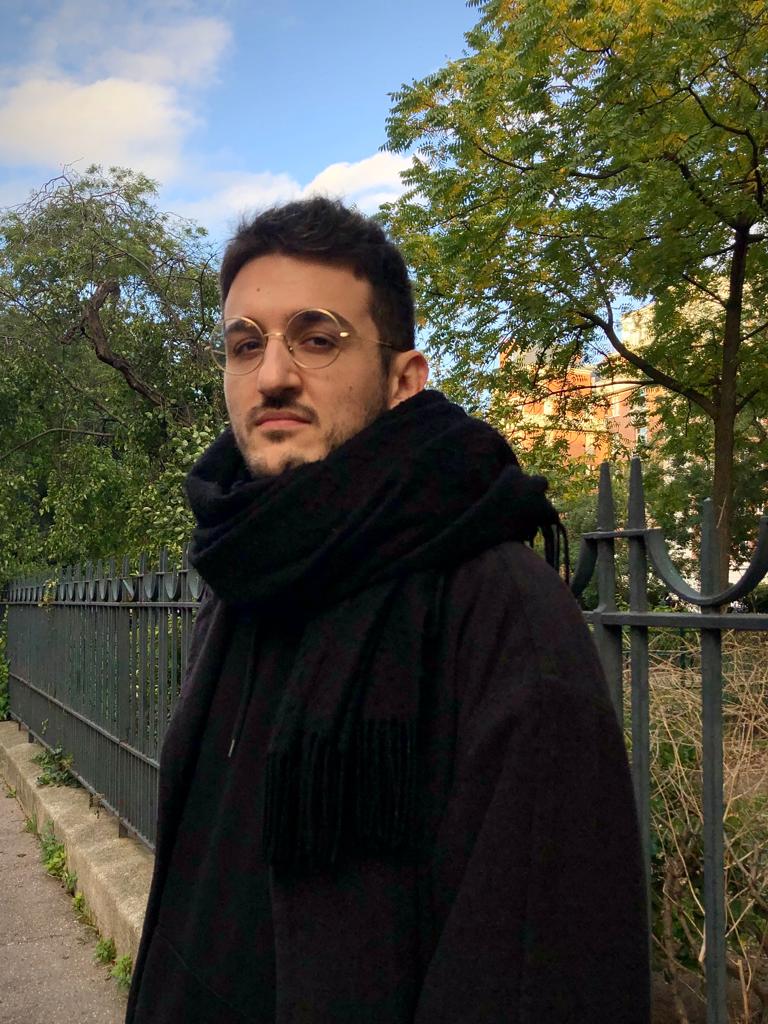
His PhD research focuses on the Italian branch of the international “new left-wing”, appearing after 1956, as an intellectual network and activist groups in periphery of the partisan left-wing. His subject is more precisely connected to the group magazines associated with “Operaismo” or “Workerism”, namely Quaderni rossi and Classe operaia, whose archives he discusses (work notes, letters, mettings reports, personal papers) with hybrid methods. He thus uses tools from social history of political ideas, socio-history of parties, sociology of political crisis and transnational mobilisations.  Continue reading Julien Allavena – Research & CV

Valeriya Korablyova – Research & CV

A Subaltern That Sings:
From Sound Resistance to Musical Diplomacy in Wartime Ukraine

CEFRES Research Area 1: Displacements, “dépaysements” & discrepancies

Contact: valeriya.korablyova[@]fsv.cuni.cz

Dr Valeriya Korablyova is a sociologist and political theorist working on post-Soviet transformations in Ukraine and the region, with the research focus on performative politics and entangled imperial/colonial legacies. She is an Assistant Professor at the Department of Russian and East European Studies and the Leader of the Research Centre “Ukraine in a Changing Europe” at the Institute of International Studies, Faculty of Social Sciences, Charles University. Dr Korablyova received her habilitation (D. of Sc. degree) in 2015 from Taras Shevchenko National University of Kyiv, with the book Social Meanings of Ideology (Kyiv University, 2014) that covers transformations of the European modernity, where the ethos of solidarity underpinning the Maidan uprising stands as a specific case in point. She has held fellowships and visiting professorships at Stanford University, the Institute for Human Sciences (IWM) in Vienna, the University of Basel, Justus Liebig University Giessen, and other institutions. Most recently, she has presented on broader implications of the Russian war of aggression for European political imaginary and structures of knowledge production. Her latest publications on the matter include: “Fighting Russia’s ‘Dark Power’: The ‘Bright Power’ of Enacted Values” in Putin’s Europe. Russian Influence in European Democracy (European Liberal Forum, 2023); ‘Why Is Ukraine Important? Challenging the colonial and Cold War legacies in European social sciences’ in Soziologie (vol. 52, no. 3, 2023); ‘Russia vs. Ukraine: A Subaltern Empire Against The “Populism of Hope”’ in Acta Universitatis Carolinae – Studia Territorialia (# 2 2022); and editing the special Topos issue “Transformations of Society and Academia in the Wake of the Russian War in Ukraine: Urgent Notes” (#2 2022). 

Continue reading Valeriya Korablyova – Research & CV